

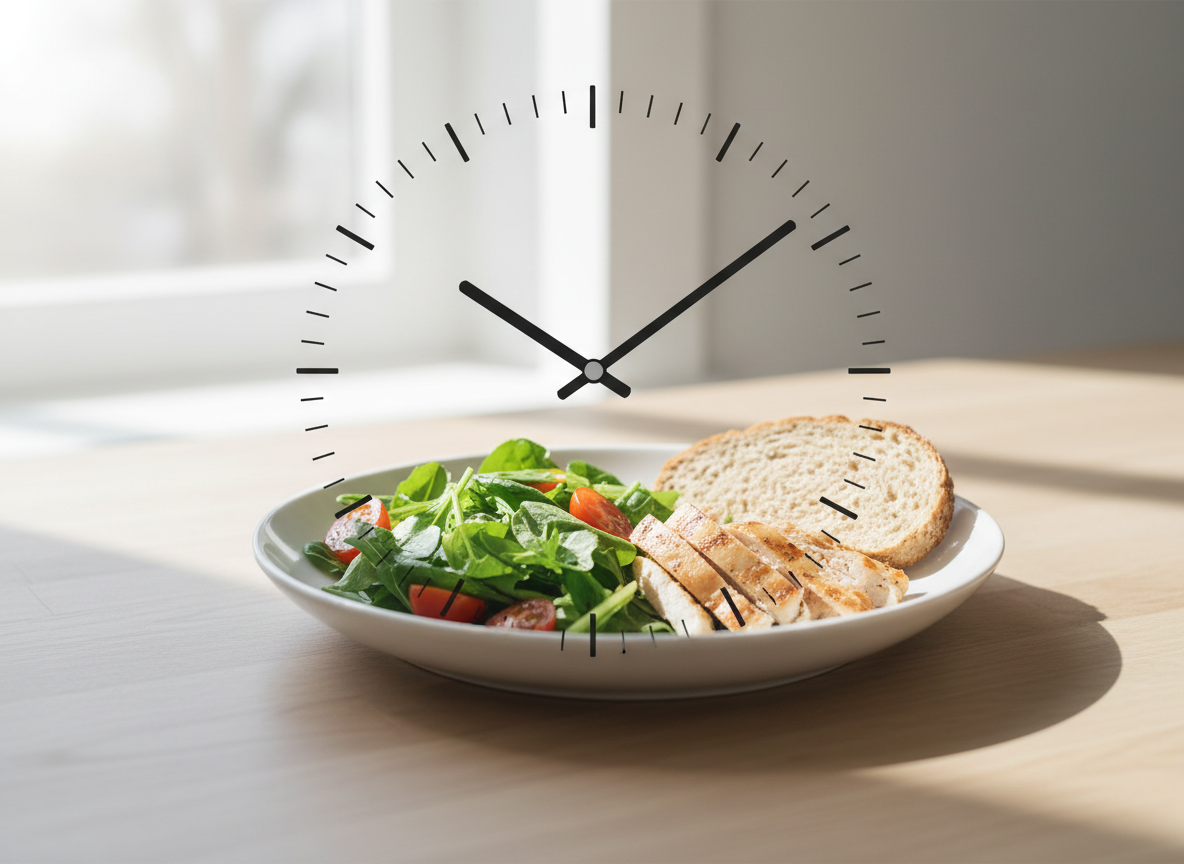
Intermittent fasting isn’t a diet in the traditional sense — it’s an eating schedule. It doesn’t tell you what to eat, only when. Here’s a balanced look at the common approaches and who should think twice before trying it.
Common approaches
16:8 (eating within an 8-hour window, fasting the rest) is the most common and generally the easiest to sustain. 5:2 (eating normally 5 days, reducing calories significantly on 2) is another popular variation. Both simply restructure when you eat rather than prescribing specific foods.
What the research actually supports
Studies suggest intermittent fasting can support weight management for some people, largely because a shorter eating window often naturally reduces calorie intake. It doesn’t appear to be dramatically more effective than other calorie-reduction approaches — it’s simply a different structure that works better for some people’s lifestyles.
It’s a tool, not a requirement
Intermittent fasting isn’t inherently better than regular balanced meals — it’s one structure among several that can work, depending on what fits your routine, appetite patterns, and social schedule.

Who should be cautious or avoid it
Pregnant or nursing people, those with a history of disordered eating, people with diabetes managing blood sugar with medication, and anyone with a chronic health condition should talk to a doctor before trying fasting — it isn’t automatically appropriate for everyone.
What matters more than the fasting window
What you eat during your eating window still matters. Intermittent fasting paired with mostly processed food isn’t a substitute for a generally balanced diet.
Curious whether this approach would actually fit your lifestyle? MyFreeHealthReport’s free questionnaire can help you think it through — and a conversation with your doctor is worthwhile if you have any underlying health conditions.
Keep reading: Weight Management Without the All-or-Nothing Mindset or The Role of Insulin in Fat Loss.


Leave a Reply