

The sun has a complicated reputation: essential for vitamin D production, yet also the leading environmental cause of skin damage and skin cancer risk. The truth, as usual, is about balance rather than extremes.

Why sun exposure matters
Sunlight on your skin triggers your body to make vitamin D, which helps regulate calcium and phosphate and keeps bones, teeth, and muscles healthy, according to the NHS. Many people, especially in the UK and other northern countries during winter, or those who spend most of their time indoors, don’t get enough.
Why too much is a problem
Too much ultraviolet (UV) radiation damages skin cells over time and raises the risk of skin cancer. The NHS notes that sunburn increases that risk, that you can burn in the UK even when it’s cloudy, and that there is no safe or healthy way to get a tan.
A reasonable middle ground
The NHS advises aiming for a balance between protecting your skin and getting enough vitamin D from sunlight. In the UK, from around late March or early April to the end of September, most people can make enough vitamin D from sunlight on their skin. Between October and early March the sun isn’t strong enough, so food and supplements matter more. To protect your skin, the NHS suggests spending time in the shade between 11am and 3pm from March to October, covering up, and never letting your skin burn.
Using sunscreen properly
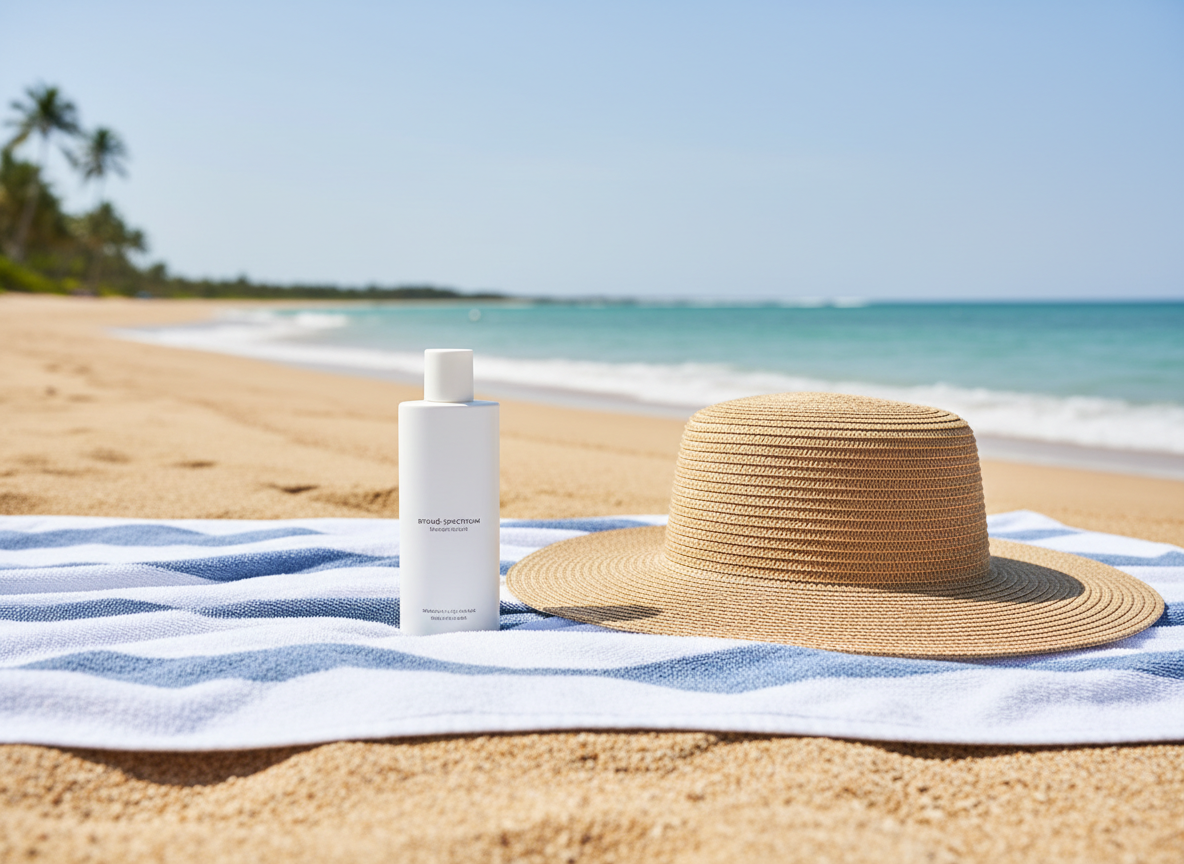
Sunscreen is sometimes blamed for low vitamin D, but the NHS notes that most people don’t apply enough sunscreen in the first place. Its advice is to protect your skin, especially when the sun is strongest, while still aiming for a balance with vitamin D. Use at least SPF 30, apply it generously (about 6 to 8 teaspoons for a whole adult body), reapply every two hours, and don’t rely on sunscreen alone: shade and clothing matter too.
Know your own skin and risk factors
Fair skin, a personal or family history of skin cancer, and certain medications can all increase sun sensitivity — worth discussing with a dermatologist if any of these apply to you.
Food and supplements can help fill gaps
Vitamin D is found in only a small number of foods, such as oily fish, eggs, and fortified foods, and it is hard to get enough from food alone. That is why the NHS advises that everyone consider a daily 10 microgram supplement during autumn and winter. Don’t take more than you need: the NHS says that 100 micrograms a day is the safe upper limit for adults, so check labels and ask a pharmacist or doctor if you are unsure.
If you’re unsure where you stand on vitamin D or sun habits, MyFreeHealthReport’s free questionnaire (affiliate link) can help, and your doctor or pharmacist can advise on whether a vitamin D supplement is right for you.
Sources and further reading
- NHS — Vitamin D: how the body makes it, food sources, and who should consider a supplement
- NHS — Sunscreen and sun safety: how to protect your skin and how to apply sunscreen
Keep reading: Supporting Your Immune System Naturally or Omega-3 and Other Nutritional Supplements.


Leave a Reply