

Protein, fiber, vitamins, minerals — these words show up on every nutrition label and wellness article, but it’s easy to lose track of what each one actually does. Here’s a quick, practical breakdown.
Protein: building and repairing
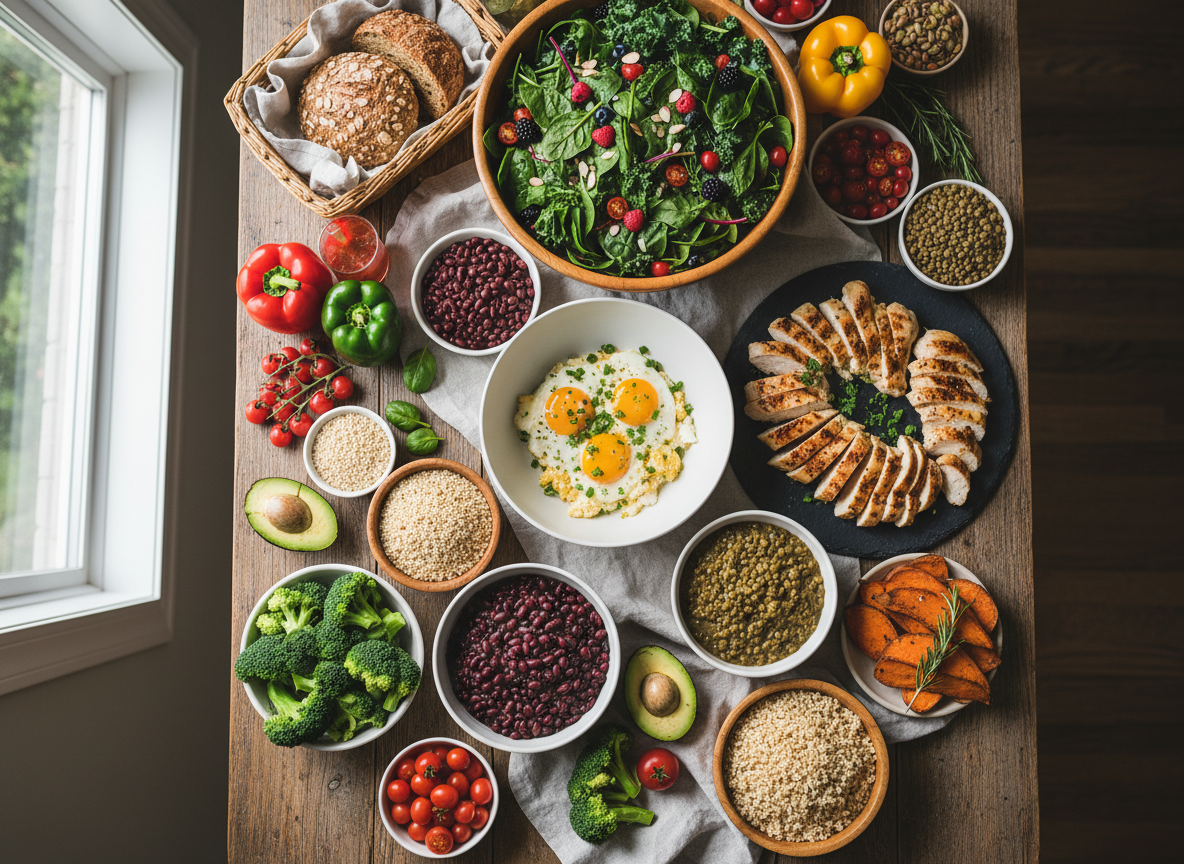
Protein builds and repairs muscle, skin, and other tissues, and plays a role in hormones and enzymes. Good sources include eggs, poultry, fish, beans, lentils, and dairy.
Fiber: digestion and fullness
Fiber supports digestion, feeds beneficial gut bacteria, and helps you feel fuller for longer. It’s found in vegetables, fruits, whole grains, and legumes — most people don’t get quite enough.
Vitamins: the small but essential helpers
Vitamins support everything from immune function (vitamin C) to bone health (vitamin D) to energy metabolism (B vitamins). A varied, colorful diet generally covers a wide range of them.

Minerals: structure and function
Minerals like calcium, iron, magnesium, and potassium support bone strength, oxygen transport, muscle function, and fluid balance. Leafy greens, nuts, seeds, and whole grains are reliable sources.
You don’t need to track all of this
Understanding what these nutrients do is useful context — but in practice, eating a varied diet with plenty of whole foods covers most of this without needing to count anything.
Curious whether your current diet is covering these bases? MyFreeHealthReport’s free questionnaire can help identify any gaps worth addressing.
Keep reading: What Balanced Nutrition Actually Looks Like or Natural Supplements: Where to Start.


Leave a comment