

“Nutraceutical” shows up on packaging and in marketing a lot, but it’s a term many people use without fully knowing what it means. Here’s a clear, simple explanation.
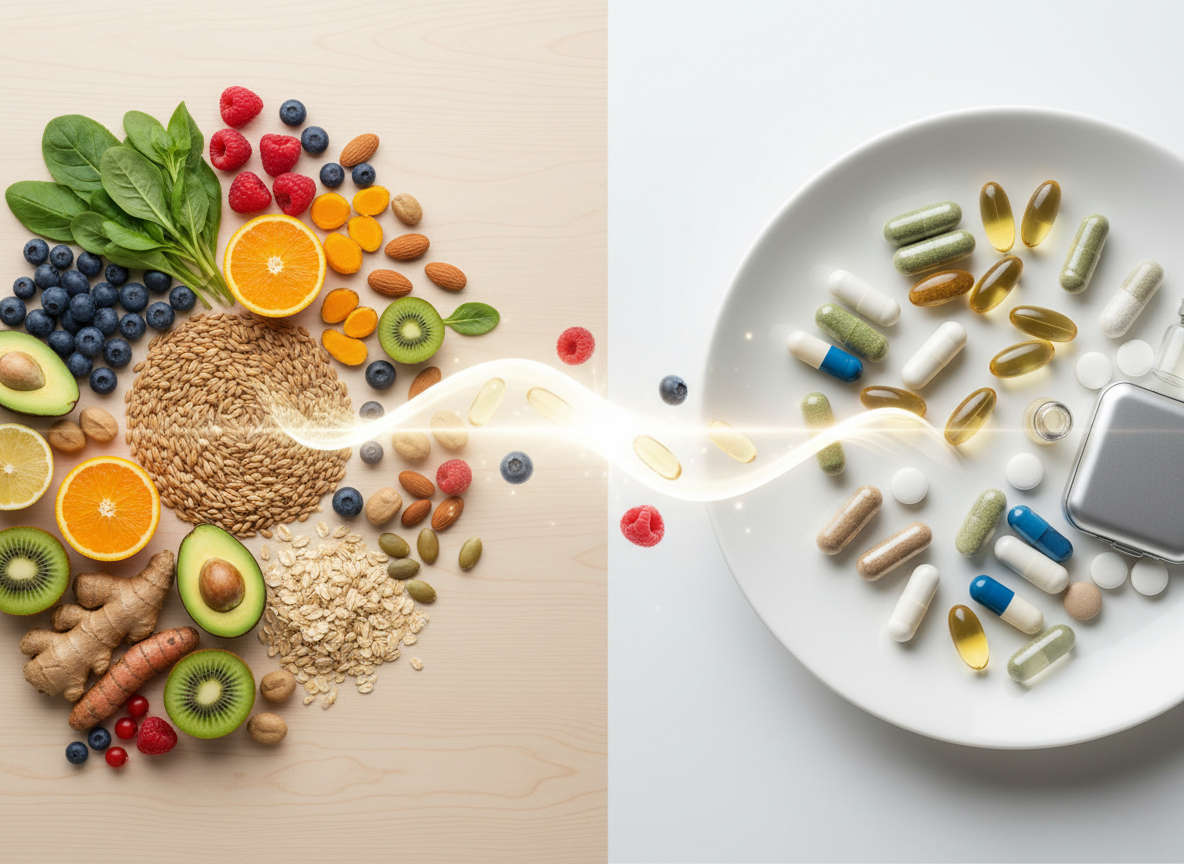
The term sits between food and medicine
A nutraceutical is generally a product derived from food sources that provides health benefits beyond basic nutrition — think concentrated plant extracts, fortified foods, or specific isolated compounds like omega-3s or probiotics.
It’s not an official regulatory category
Unlike “drug” or “dietary supplement,” which have specific legal definitions, “nutraceutical” is more of a marketing and industry term — which is exactly why it can mean different things on different products.
It’s not the same as a prescription medication
Nutraceuticals aren’t held to the same testing and approval standards as drugs. They may support general wellbeing, but they aren’t designed or permitted to diagnose, treat, or cure disease.

Quality and method matter more than the label
Because the term itself isn’t strictly regulated, the same evaluation standards that apply to any supplement apply here too — third-party testing, transparent dosing, and realistic claims matter more than the word “nutraceutical” on the front of the box.
A nutraceutical is a tool, not a shortcut
Like any supplement, nutraceuticals work best alongside — not instead of — consistent nutrition, movement, sleep, and other foundational habits.
If you’re trying to figure out which products are actually worth your attention, MyFreeHealthReport’s free questionnaire can help point you toward what’s relevant for you.
Keep reading: How to Evaluate Supplement Quality and Safety or Herbal Supplements 101.


Leave a Reply